
How to Play Your Best Tennis in Brutal Heat
Playing tennis in extreme heat is a skill, and the tours just rewrote their rulebooks around it. The junior's guide to beating the August oven.
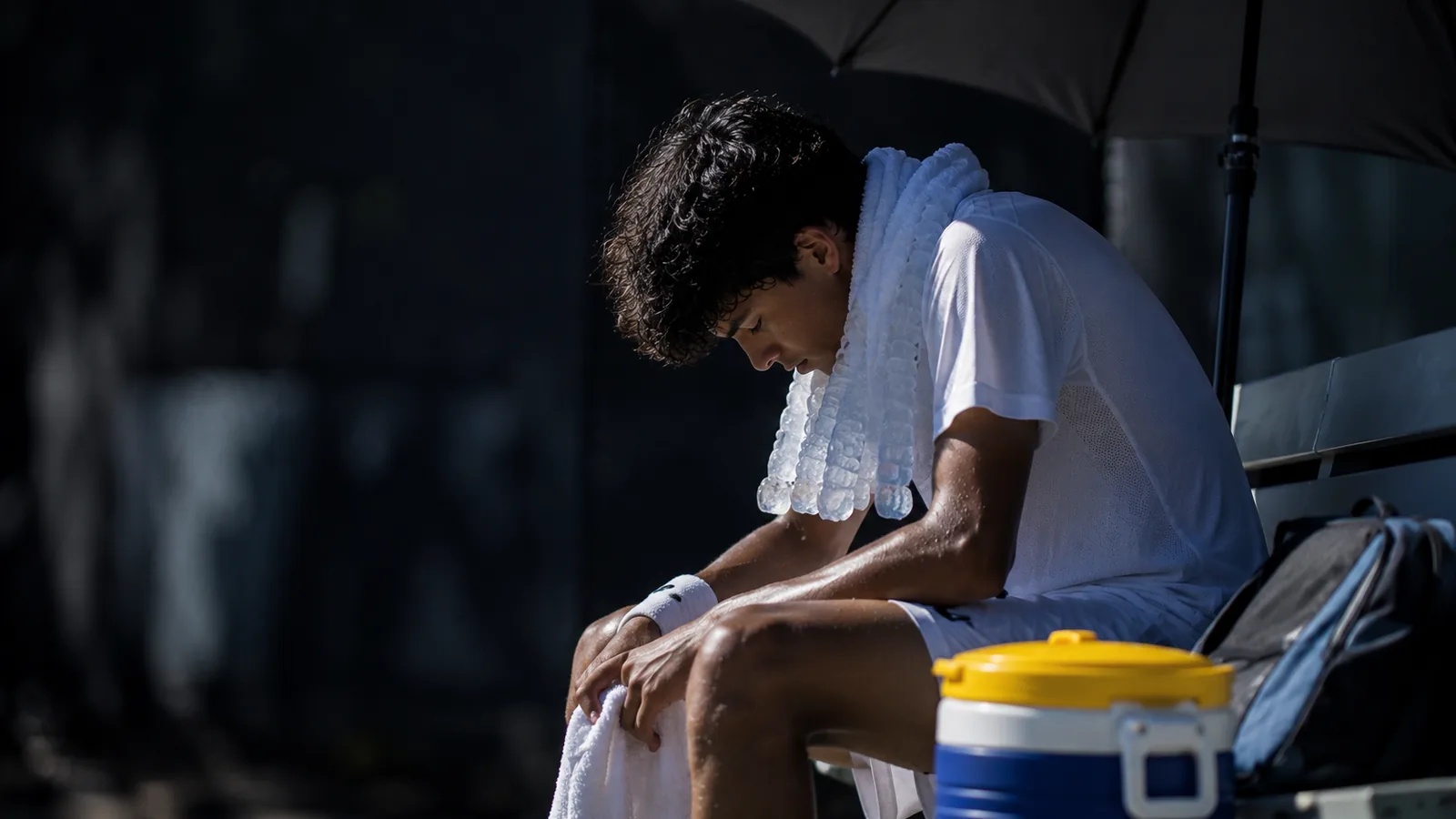
Heat is not a vibe, it is an opponent with a scouting report. Losing just 1 to 2 percent of your body weight in sweat measurably drops tennis performance, per USTA sport science, and juniors can sweat more than a liter an hour in summer conditions. The players who survive August are not tougher. They are prepared in three specific ways: acclimated before the event, cooled before the match, and hydrated on a schedule instead of a feeling.
The pros just proved how seriously to take this.
Even the tour blinked
The 2018 US Open is the reference disaster: temperatures near 100 degrees, humidity over 50 percent, five men retiring mid-match on one day, and the men's extreme-heat break used for the first time. Marton Fucsovics, afterward: "I was dying after each point. It was too hot for tennis. It's dangerous." Wimbledon 2025 then opened at 91 degrees, its hottest opening day on record.
The rulebooks moved. As of 2026, the ATP formally adopted a heat rule built on the WBGT heat-stress index: a 10-minute cooling break becomes available once conditions cross the threshold, and play stops entirely when they climb high enough. The Slams run similar policies. USTA junior events use heat guidelines with rest breaks too. Know your event's version before you play it, because the break only helps players who planned what to do with it.
Arrive already adapted
The single biggest heat advantage is boring: show up used to it. Sports-science guidance puts heat acclimatization at roughly 7 to 14 days, during which your body learns to sweat earlier and more efficiently, your heart rate drops for the same work, and you lose less sodium per liter. USTA sport science adds the warning label: most heat illness happens in the first two or three days in a hot environment.
The junior translation: if you live in a mild climate and your nationals are in a furnace, train in the heat of the day for a week or two beforehand, building up gradually. Flying in cold on Thursday for a Friday first round is playing the event with a handicap you chose.
Cool first, then keep cooling
Pre-cooling is the most underused legal advantage in junior tennis. USTA guidance endorses ice towels or vests for about 15 minutes an hour before play, and a cold slushy-style drink in the half hour before you walk on. During the match, the changeover is a cooling station if you pack it like one: ice towels for the neck, a cooler that still has ice in the third set, shade every sitdown.
Hydration runs on numbers, not thirst. The USTA protocol: 16 to 20 ounces about two hours before play, then 4 to 16 ounces every changeover depending on how heavily you sweat, using a sports drink in the 6 to 8 percent carbohydrate range with electrolytes. Sweat sodium losses vary between players by up to 15 times, which is why the kid who cramps every August needs a salt plan, not a lecture about toughness.
One myth to bury: kids are not doomed in the heat. Current pediatric consensus is that properly hydrated young athletes tolerate heat about as well as adults. The gap is preparation, not physiology. And one hard line that stays a line: dizziness, confusion, vomiting or the chills in the heat means stop and get help. No tournament point outranks that.
Heat is a skill. Treat it like your serve.
The durability mindset we wrote about with Kyrgios applies squarely here: the unglamorous preparation is what lets talent show up in the third set of a 95-degree quarterfinal. Practice your heat plan at practice, not for the first time at nationals, and when a two-match day hits, recovery becomes the match after the match.
August is watching. Be the player still moving at 4-4 in the third.
Build a profile that does the work for you.
How do tennis players stay cool in extreme heat?
Pre-cooling before the match with ice towels or vests and a cold slushy drink, then structured cooling on every changeover: ice towels on the neck, shade, and scheduled fluids. Tours and junior events also provide a 10-minute heat break once conditions cross heat-stress thresholds.
How much should a junior tennis player drink during a match in the heat?
USTA guidance is 16 to 20 ounces about two hours before play, then roughly 4 to 16 ounces every changeover depending on your sweat rate, using a 6 to 8 percent carbohydrate sports drink with electrolytes. Heavy sweaters need the top of the range.
How long does it take to get used to playing in the heat?
About 7 to 14 days of gradually building exposure. Acclimatization teaches the body to sweat earlier and more efficiently at a lower heart rate, and most heat illness occurs in the first 2 to 3 days in a hot environment, so arrive early or pre-adapt at home.
Sources: USTA sport science; ATP Tour; BBC Sport; CNN; Korey Stringer Institute; American Academy of Pediatrics; British Journal of Sports Medicine