
The Shots That Actually Win Junior Tennis Matches
High percentage tennis means taking the shot the math favors. The data on crosscourt, the first four shots, and a rally game to test your shot IQ.
Crosscourt over down the line by default, depth over flash, full attention on the first four shots of the point: that is high percentage tennis, and it is how junior matches are actually won. The logic is blunt. Most points end on a mistake, not a winner, so the player who donates less almost always walks off with the handshake. Scroll our feed and you will see the tweener, the no-look flick, the running banana ball. Those clips travel. As tactical advice, they are a trap. The version of tennis that wins on Sunday is quieter, and the data behind it is some of the clearest in any sport.
The highlight reel is lying to you
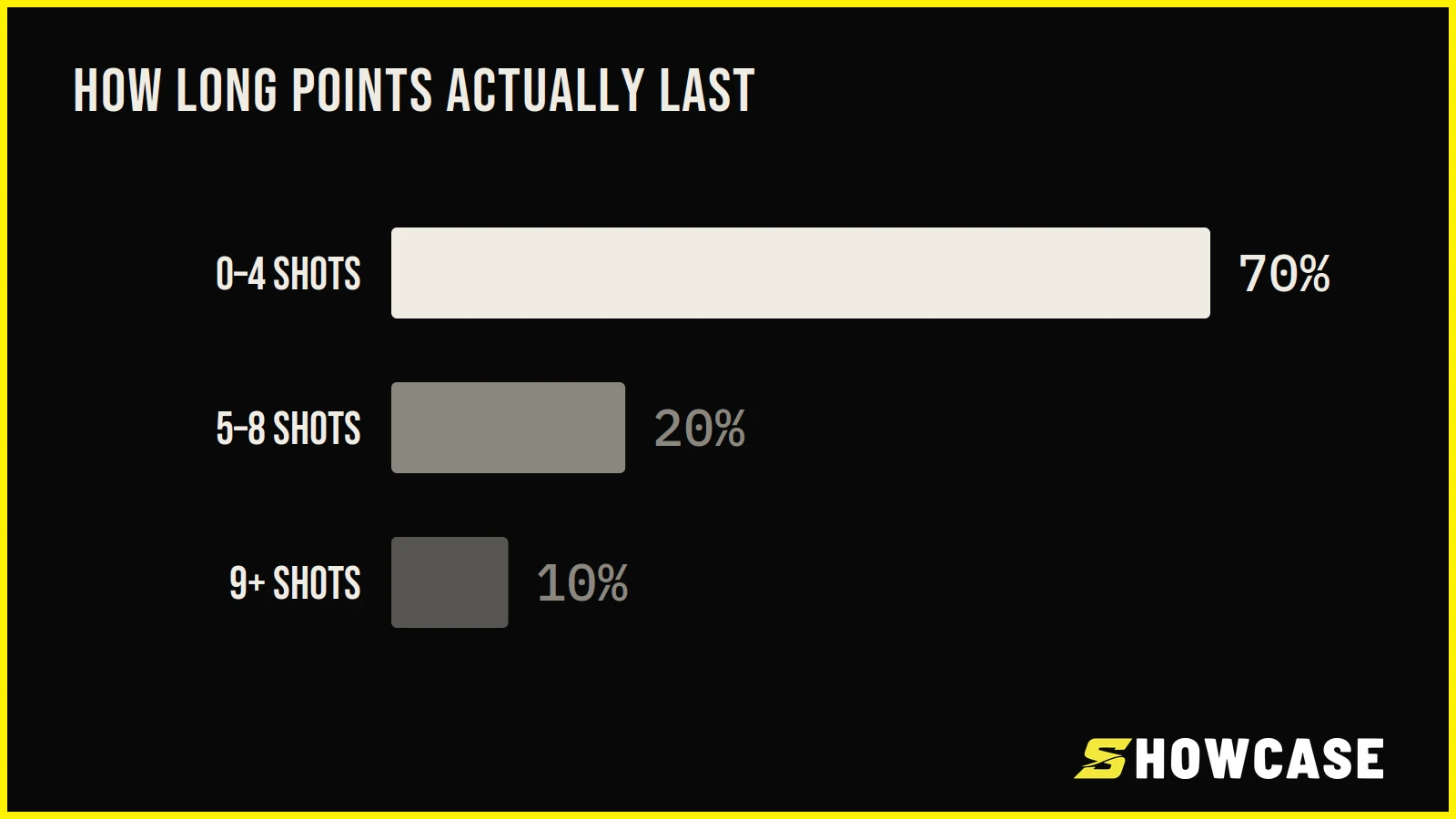
Craig O'Shannessy, the strategy analyst who spent 2017 to 2019 on Novak Djokovic's team, built his reputation on one unglamorous finding. When he broke down the 2015 Australian Open men's singles draw, 70 percent of points were over within four shots. Twenty percent lasted five to eight. Only 10 percent reached nine or more. The single most common rally length in tennis is one shot in the court, roughly a third of all points. The epic 25-ball exchange you rewatched four times this week is a rounding error. Junior matches are not decided by who wins the war of attrition. They are decided by serve, return, and the ball right after each.
Most points end in a mistake
Here is the number nobody puts on a poster. In charted professional matches, once the ball is in play, roughly two-thirds of points end in an error, not a winner. Jeff Sackmann's Tennis Abstract ran the count across a Match Charting Project dataset of around 1,500 pro matches in 2016: for men, 32.5 percent of rally points ended in winners, 45.8 percent in unforced errors and 21.7 percent in forced errors. The women's numbers land in the same place. Those are the cleanest ball-strikers on earth. Now picture a 14s match in July heat. You do not have to outhit anyone. You have to be the player who blinks last, especially when the nerves show up. The margins are thinner than they feel, too: across the 2016 Australian Open men's draw, match winners won just 55 percent of the points played. Tennis is not won by a knockout. It is won on points, and the judges only count errors you did not make.
Crosscourt is rigged in your favor
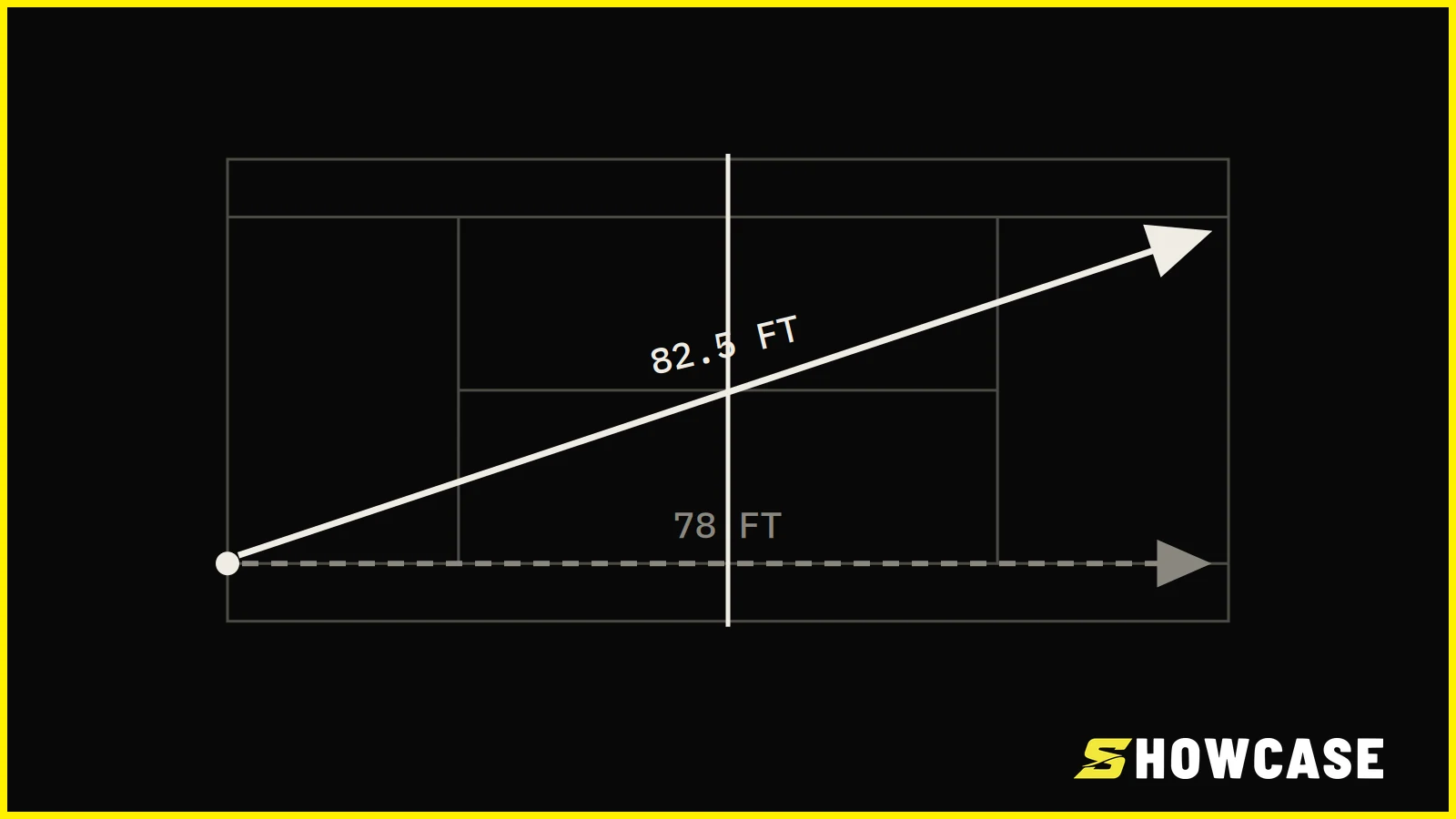
The court itself is biased, and almost nobody plays like they know it. Run the geometry on an ITF-standard court: corner to corner, a crosscourt ball has about 82 and a half feet to land in. Down the line has 78. That is about 4½ extra feet of court for the same swing. The net is rigged the same way. It stands 3 feet 6 inches at the posts and drops to 3 feet at the center, so a corner-to-corner crosscourt crosses at the net's lowest point while a down-the-line ball crosses roughly 4 inches higher, over a net that is 6 inches taller at its worst. More court, lower net, and the ball travels back along the same diagonal you received it on. Down the line is not forbidden. It is expensive, and you should know the price before you pay it.
When to change direction
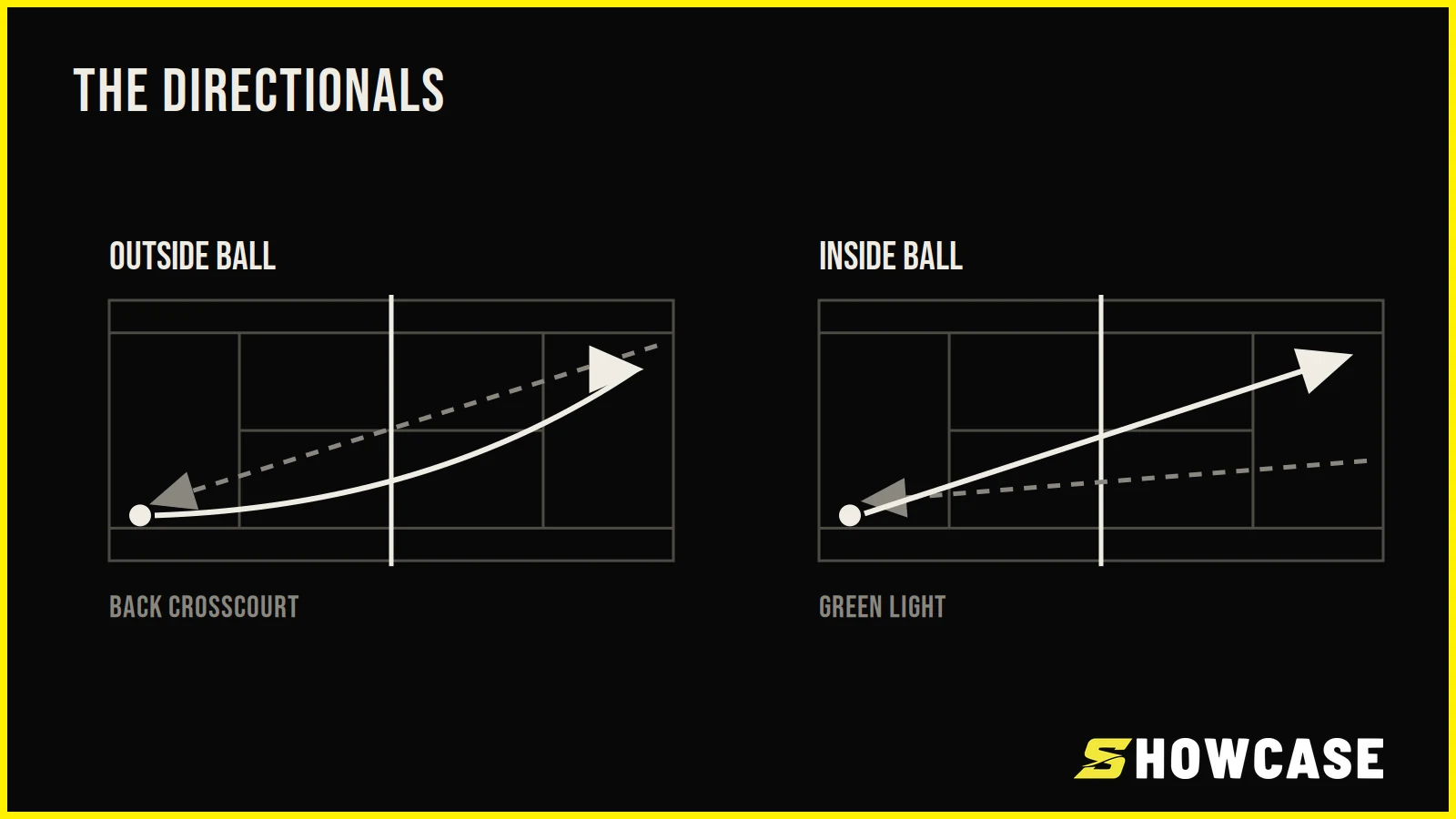
So when do you pull the trigger? College coaching answered this decades ago. Paul Wardlaw, the longtime college coach who ran the Iowa and Brown programs before moving to a USTA role in 2026, wrote the rule down in his book Pressure Tennis, and coaches have taught it as "the directionals" ever since. If the ball crosses your body on its way to you, it is an outside ball: send it back where it came from, almost always crosscourt. If you can step around and take the ball on the racket side without it crossing you, it is an inside ball, and that is your green light to change direction. The logic is physics, not fear. Redirecting an outside ball means reworking the angle of a ball moving across you, and the error rate climbs fast. The inside ball is already lined up with the new target. Watch any well-coached college dual match and you will see the directionals running on a loop.
Win the first four shots
If 70 percent of points end by shot four, your scoreboard lives there. First serve percentage beats first serve speed. The serve plus one, the shot immediately after your serve, wants to be a forehand hit to a big target, crosscourt or into the open court. The return does not need to be brave; it needs to be deep and in, because a deep return steals the server's plus-one time. O'Shannessy's needle for practice culture applies double to juniors: "Why would you practise something 90 per cent of the time (long rallies), when they occur only 10 per cent of the time?" If your practice weeks are all 30-ball grinding drills, you are rehearsing the rare point and improvising the common one. Flip the ratio. Serve, return, plus one, every session.
Play it before you play it
Reading percentages is one thing. Choosing them with a scoreboard in your head is another. So we built a point you can play. In the Rally IQ simulator below, you get real match situations, three shot choices each, and the math talks back after every pick. String together the high-percentage choices and you win the point; chase the highlight and you will learn exactly what it costs. Run it a few times before your next tournament, then go earn the rematch the boring way. The highlight reel can wait until match point.

RALLY IQ
Build a profile that does the work for you.
What is high percentage tennis?
High percentage tennis means choosing the shot with the most margin: crosscourt by default, deep rather than flashy, and focused on the first four shots of the point. The strategy works because roughly 70 percent of points end within four shots in Craig O'Shannessy's Grand Slam data and most points end on an error, so reducing mistakes wins more matches than producing winners.
Should you hit crosscourt or down the line in tennis?
Crosscourt is the default. On an ITF-standard court the crosscourt diagonal gives you about 4½ more feet of court, and the ball crosses the net near its center, where it is 6 inches lower than at the posts. Go down the line mainly on an inside ball, one you can take without it crossing your body, which is the core of the Wardlaw directionals.
How long is the average tennis rally?
Shorter than most players think. In Craig O'Shannessy's analysis of the 2015 Australian Open men's singles draw, 70 percent of points ended within four shots and only 10 percent reached nine shots. The most common rally length in tennis is a single shot landing in the court, which happens on roughly a third of points.
Sources: Brain Game Tennis; Tennishead; Tennis Abstract; ITF; Paul Wardlaw, Pressure Tennis (Human Kinetics); Denver Athletics