
How JTCC Ended Up on Both Sides of a National Final
JTCC had both finalists in the USTA Girls' 16s Nationals. Shristi Selvan beat teammate Aarini Bhattacharya for the Gold Ball. That is not a coincidence.
The USTA Billie Jean King Girls' 16s National Championships came down to one court at the Barnes Tennis Center in San Diego on August 15. Every player on it came from the same place. Top seed Shristi Selvan of Laurel, Maryland beat her training partner, 14th-seeded Aarini Bhattacharya of Oakton, Virginia, 4-6, 6-4, 6-4 in just under three hours.
Both girls train at JTCC, the Junior Tennis Champions Center in College Park, Maryland. Selvan takes the Gold Ball and a main draw wild card into the US Open Junior Championships. Bhattacharya takes the Silver Ball. And an academy on the other side of the country had the final won before the coin toss.
A final neither of them gave away
An all-teammate final can go flat. This one went the other way. Selvan dropped the first set, leveled the match, then started cramping at 3-1 in the third: hand, wrist, quads, calves. Her racquet hand locked up mid-game. "Glued shut. I couldn't open it," she said afterward. She got one medical timeout, was denied a second, and the code violations cost her first a point and then a whole game.
Then she named the thing that got her through it. "I was determined to win this match. It's always been my dream to get into the US Open Juniors, and to have Billie Jean King give me the award." The 16s title is one of the crown jewels of the USTA's hard court Nationals, the same August week that sends the 18s champions straight into the US Open main draw. Past Girls' 16s champions include Chris Evert, Tracy Austin and Mary Joe Fernandez. Selvan's name now sits on that list.
One player's season, one academy's system
For Selvan this was not a breakout. It was a trend line. She won the Winter Nationals Girls' 16s title in January, took the Easter Bowl 16s singles and doubles in the spring, and has now added the biggest one: her third singles Gold Ball of 2026. Bhattacharya, seeded 14th, beat the draw in front of her to reach a final most players never touch.
Both are coached day to day at JTCC by Paula Coyos, the academy's Head of Girls'/Women's Tennis, alongside senior high performance coach Mira Vlcek. Coyos put the result in the only frame that matters for a development program. "This moment is also a reflection of the environment we continue to build at JTCC, the vision and leadership of our High Performance program, the quality and intensity of our daily training, and a team of coaches deeply committed to excellence and to developing every player to their fullest potential."
That is the part worth studying. Two players from one program in a national final is not luck. It is density.
The Blackman effect, ten months in
The result lands less than a year into a leadership reset. Martin Blackman took over as JTCC's CEO on October 1, 2025, returning to the campus he ran from 2004 to 2008, the era when JTCC became the first USTA Regional Training Center. In between, he spent a decade as General Manager of USTA Player Development, from 2015 to 2024. The top of American tennis was rebuilt on his watch: Sloane Stephens and Coco Gauff won US Opens, and the 2024 US Open produced an all-American men's semifinal and two American runners-up. JTCC's own read on that stretch is that the past three years saw more American players in the top 10, 20 and 50 than at any point since the mid-1990s.
Now he is applying the same playbook at academy scale, and San Diego is the first national-stage receipt. "Having two of our top young women in the Finals of the Girls' 16s Nationals is incredibly energizing for our entire team at JTCC, and it signals our return to excellence in High Performance programming," Blackman said. "Both are leaders at JTCC on and off the court — living our values and giving back through our Adaptive and Community Outreach programs."
Read that second sentence again. Both national finalists give back through JTCC's adaptive tennis and community outreach programs. That is a culture choice, not a coincidence.
The coaching behind the trophy
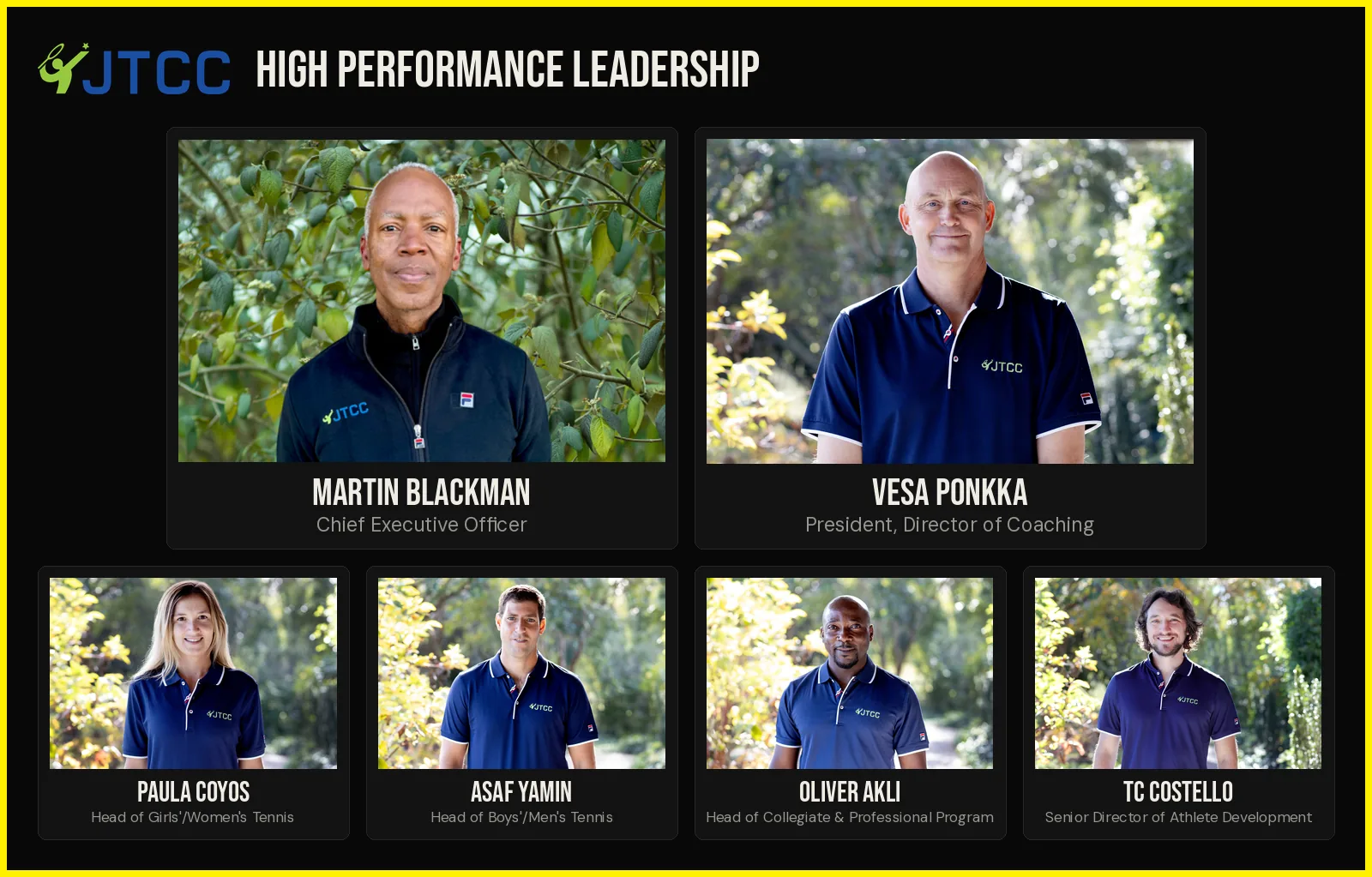
Under Blackman sits a high performance staff most federations would take. Vesa Ponkka, JTCC's President and Director of Coaching, has driven the academy's coaching philosophy since it opened in 1999. He was the US Olympic Committee's National Developmental Coach of the Year in 2011, and JTCC has twice been named the USTA's national developmental program of the year under his leadership. In January 2026 he stepped back into hands-on coaching leadership, overseeing High Performance training alongside Blackman.
Today the staff runs deep at every level: Asaf Yamin heads boys'/men's tennis, Coyos heads girls'/women's tennis, TC Costello runs athlete development as Senior Director, and Oliver Akli heads the collegiate and professional program.
Ponkka's response to San Diego reads like the program's thesis. "It is a privilege to be a teacher, coach, and mentor. It has been an honor to witness JTCC players' character, effort, and fortitude at the Hard Court Nationals this week. Thank you, JTCC family, for Trusting Your Training." Coaches as mentors, not just technicians. That is the model, and this week it produced both ends of a national final.
A nonprofit, a family, and a pro pipeline
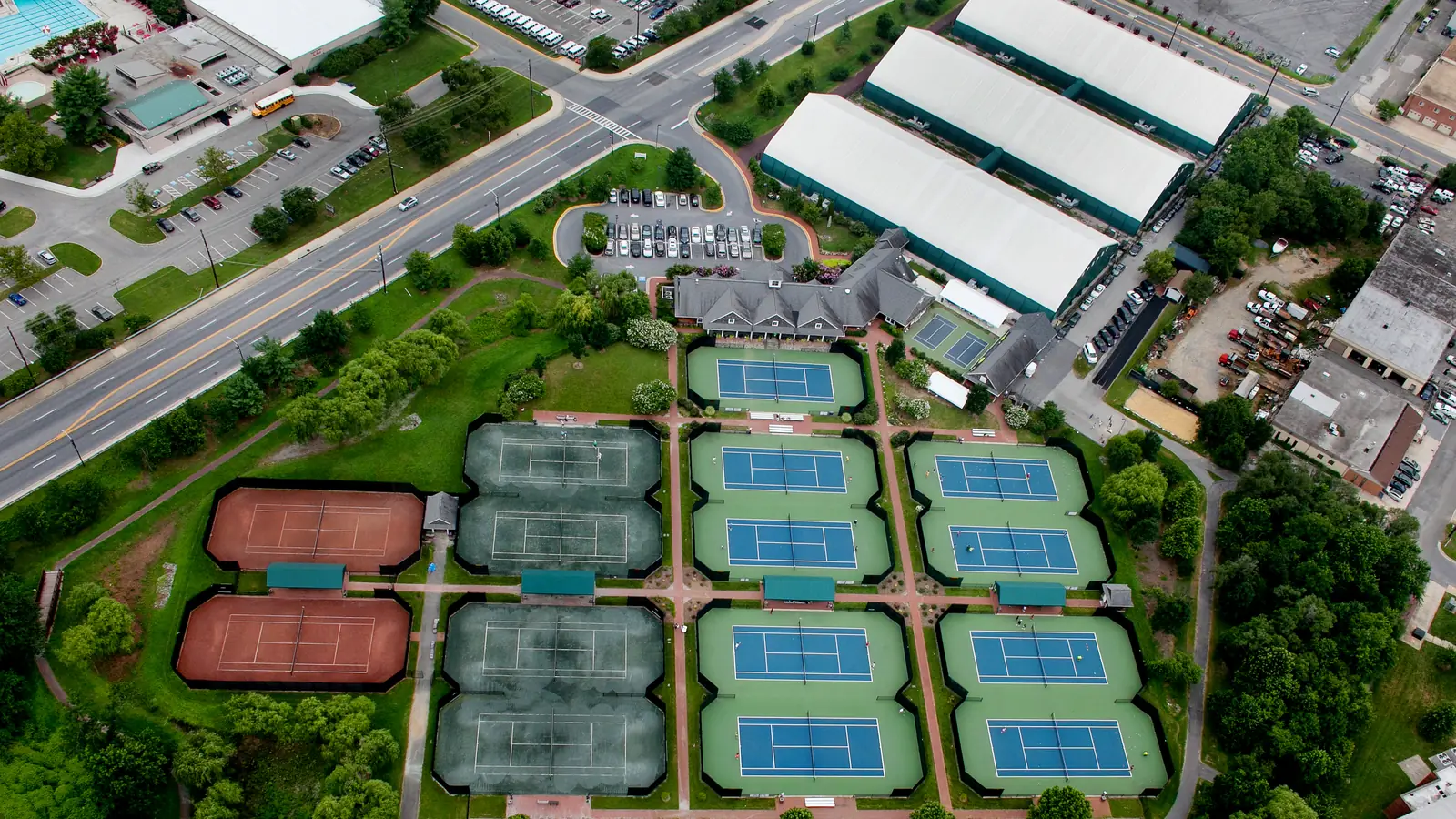
Here is what makes JTCC close to unique in American tennis. It is a 501(c)(3) nonprofit, founded in 1999 by the late Ken Brody, that competes with the biggest for-profit academies on results. The College Park campus holds 32 courts, hard, Har-Tru and red clay, and the mission runs far wider than the full-time academy track: schools and community outreach programming since 2009, adaptive tennis, character development baked into the daily training, and adult and high performance programs sharing the same campus. The USTA Foundation named JTCC its NJTL chapter of the year in 2024. And JTCC's players have earned 400+ college placements across 105 schools and $26M in scholarships.
But the numbers are not the real tell. The tell is who comes back. Notice the word Ponkka reached for on trophy day: family. Frances Tiafoe, a US Open semifinalist with a career-high No. 10 ranking, grew up on these courts while his father worked on the center's maintenance staff. JTCC was less an academy he attended than a home he was raised in. Hailey Baptiste has reached the WTA top 25. Robin Montgomery won the junior US Open in 2021 and her first WTA title on the pro tour this June. And when Denis Kudla finished a pro career that peaked at No. 53 in the world, he came back in January to coach the next generation on the courts he grew up on. Board chair Charlie Brody was one of the first students through the doors in 1999. Even the CEO hire was a homecoming: JTCC titled Blackman's announcement "Welcome Home." People do not just graduate from JTCC. They return to it.
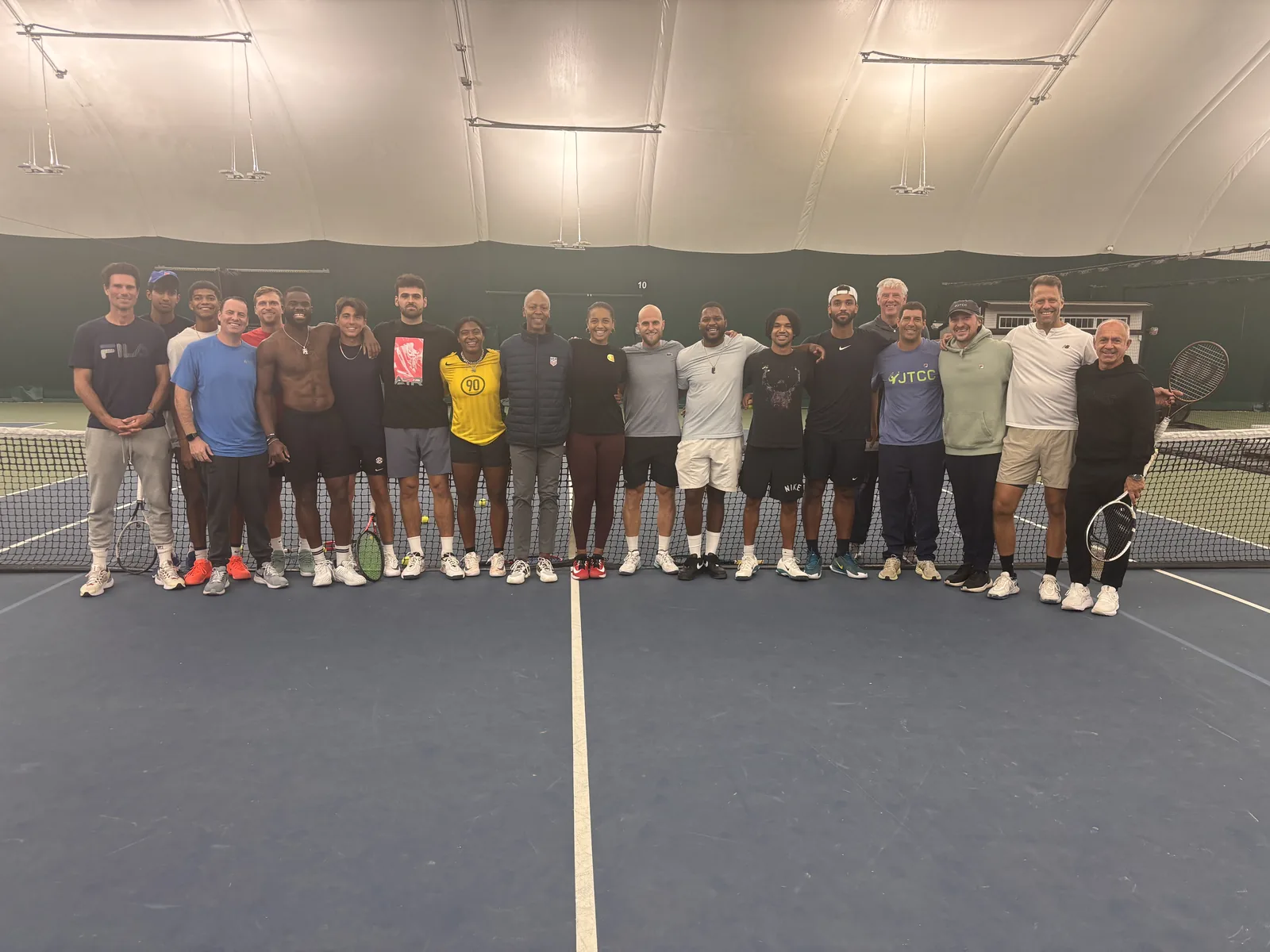
The pipeline from College Park to the pro tour is not a promise. It is a record. And with two 16s finalists standing beside Billie Jean King on trophy day, the next chapter of it is already headed for the draw at Flushing Meadows.
Junior tennis runs on programs like this, and on players you should know before the world does.
Build a profile that does the work for you.
Who won the 2026 USTA Girls' 16s National Championships?
Shristi Selvan of Laurel, Maryland won the 2026 USTA Billie Jean King Girls' 16s National Championships in San Diego on August 15, beating Aarini Bhattacharya of Oakton, Virginia 4-6, 6-4, 6-4. Both finalists train at JTCC, the Junior Tennis Champions Center in College Park, Maryland.
What does winning a USTA Gold Ball get you?
A Gold Ball is the trophy for winning a USTA national championship, and at the August hard court Nationals it comes with more. The Girls' 16s champion earns a main draw wild card into the US Open Junior Championships, and the 18s champions earn wild cards into the US Open main draw itself.
What is JTCC in tennis?
JTCC is the Junior Tennis Champions Center, a nonprofit training center in College Park, Maryland founded in 1999. Its alumni include Frances Tiafoe, Hailey Baptiste and Robin Montgomery, and it is led by CEO Martin Blackman, who ran USTA Player Development from 2015 to 2024.
Sources: USTA Southern California; USTA; JTCC; Tennis Atlantic; Tennis TourTalk; ZooTennis; ATP Tour; Wikipedia; World Tennis Magazine