
Does College Tennis Kill Your Pro Shot?
No. College tennis can launch a pro career, not block it. Michael Zheng beat the British No. 1 at Wimbledon weeks after graduating Columbia.
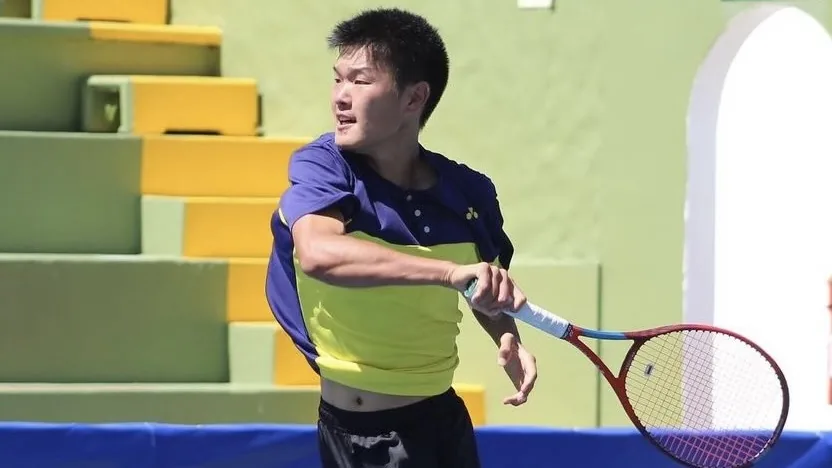
The fear every junior family says out loud: four years of college tennis is four years the pro window stays shut. Michael Zheng spent those four years at Columbia. In May 2026 he collected his diploma. Weeks later he came through qualifying, walked onto Court 2 at Wimbledon, and knocked out Cameron Norrie, the British No. 1, in a five-set war that ended in a final-set tiebreak. The broadcast reportedly cut away from a Jannik Sinner match to show the finish.
So the honest answer to the scariest question in recruiting is no. College did not cost Zheng his shot. College is how he built one.
The four years everyone calls a "delay"
Here is the number that ends the argument. A year ago Zheng was ranked outside the world's top 400. He arrived at Wimbledon around No. 144, and the Norrie win projects him to a career high near the top 130, knocking on the top 100. That is not a player whose clock ran out. That is a player who was still climbing, fast, at 22.
Zheng is blunt about why he was not ready to turn pro out of juniors. "Four years ago I knew I wasn't ready just physically for the week in, week out grind of the Tour," he told ATPTour.com. "The past four years, I developed a lot on that front. So I think now I'm ready to give the pro Tour a shot." The developing did not happen instead of tennis. It happened through it.
What he actually did with the time
Zheng did not disappear into a lecture hall for four years. He was a two-time NCAA singles champion, winning it in 2024 and 2025, the first back-to-back men's champion since Steve Johnson in 2011 and 2012, and Columbia's first singles champion since 1906.
And he was already testing himself against pros while enrolled. In January 2026, still a student, he won his first tour-level match at the Australian Open over Sebastian Korda, a former world No. 15. He has three ATP Challenger titles. He used a PIF ATP Next Gen Accelerator spot to skip most of the brutal Futures grind and jump straight to the Challenger level. College was not a holding pattern. It was a runway.
College is a pressure lab
The most useful thing Zheng said at Wimbledon was not about his forehand. It was about noise. Asked how a 22-year-old stayed calm against a home favorite on a screaming Court 2, he pointed straight at college tennis.
"When you're playing on a court like this and you're playing a British player who is the home favorite, I think college prepares you really well for that," he said. "All the away games you go to, everyone is cheering against you. It's how you deal with that kind of atmosphere, that pressure." Four years of hostile dual-match crowds is a rehearsal the junior-to-pro fast-trackers never get.
The honest part: this is not automatic
Now the caveat, because we do not sell fairy tales. College does not make you a pro. Zheng is an elite outlier who was a Wimbledon boys' finalist in 2022 before he ever enrolled, and the jump from campus to the ATP Tour is still, in the ATP's own words, "never guaranteed." Plenty try and stall.
What Zheng kills is the specific fear that college forecloses the pro path. It does not. For a player who is not physically or mentally ready to grind Futures at 18, and most 18-year-olds are not, four years of high-level tennis, real coaching, and a degree to fall back on is a stronger bet than a plane ticket and a prayer. The path is not slower. It is sturdier.
What a recruiting family shoot take from this
Stop framing it as college versus pro, like one door locks the other. Zheng's four years were the on-ramp to the pro door, not a detour from it. The real questions are the useful ones. Is the player developing every year. Are they getting seen. Are they building something that compounds.
That last one is where families sleep on the work. Zheng got known by winning, but most players build their name by documenting the climb, and that audience is the asset that follows you from juniors to college to whatever comes next. It is the same thing that gets you in front of college coaches and, later, brands. (For how that turns into real money even in a non-revenue sport, see Can High School Tennis Players Make NIL Money?) UTR gets you rated. Getting known is what turns a good junior into a recruited one.
Build a profile that does the work for you.
Can you still turn pro after playing college tennis?
Yes. College tennis does not close the pro window, and it can widen it. Michael Zheng played four years at Columbia, graduated in May 2026, and weeks later beat British No. 1 Cameron Norrie at Wimbledon while climbing toward the ATP top 100. He credits college with the physical development he lacked at 18.
Why did Michael Zheng choose college over turning pro out of juniors?
By his own account, he was not physically ready for the week-in, week-out grind of the pro tour at 18. He used four years at Columbia to build that durability while winning two NCAA singles titles and three ATP Challenger titles, then turned pro ready rather than raw. He says he is now "ready to give the pro Tour a shot."
Does playing college tennis hurt your ranking or delay your pro career?
Not necessarily. Zheng went from outside the world's top 400 a year ago to the edge of the top 100, much of it while still enrolled, by entering pro events through pathways like the PIF ATP Next Gen Accelerator. College can run alongside a pro climb, not behind it. It is still hard, and success on tour is never guaranteed, but college itself is not the thing holding a player back.
Sources: ATP Tour feature on Michael Zheng (Wimbledon 2026); Columbia Athletics match + NCAA title reports; ESPN on Zheng's repeat NCAA title; LTA/Sky Sports on Norrie as current British No. 1; Wikipedia 2022 Wimbledon Boys' Singles final.